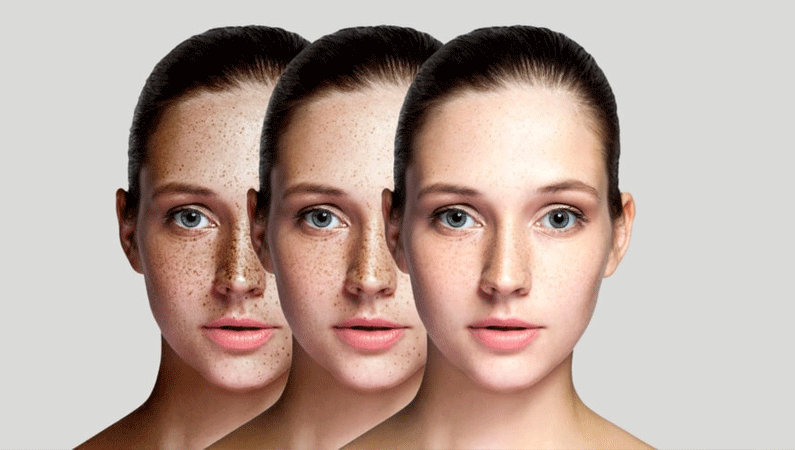
Personalised care for melasma, post-acne marks, sun spots and other common pigmentation concerns in Chembur, Mumbai.
Pigmentation is a common and usually harmless condition in which certain patches of skin become darker than others. Generally, this darkening is caused by excess melanin deposition. When pigmentation occurs, the skin also reverts back to normal after a period of time. However, if the pigmentation persists and keeps increasing in size or number or darkens further, this is called hyperpigmentation.
Skin color is a unique feature of the human body. Unlike past eras in which people used whitening creams to have fairer skin color, people are starting to love their natural skin color no matter what. Your skin, hair, and eye color are due to a pigment called melanin. The changes in the body's melanin production can lead to hypopigmentation , hyperpigmentation , or depigmentation . If you come across any dark spots or light patches on your body, immediately reach out to a skin specialist.
Dr. Manisha Saney is a cosmetologist and trichologist who assesses pigmentation concerns and recommends an individual care plan based on the likely cause, skin type and medical history.
For a detailed overview of causes and prevention, read our guide to skin pigmentation, treatment options and prevention.
For selected pigment concerns, learn how a carefully assessed Pico laser consultation in Mumbai differs from general pigmentation treatment.
Explore dedicated guidance for melasma treatment, freckles and sun-spot assessment, dark-neck pigmentation, intimate-area pigmentation and laser toning for selected pigmentation.
These concerns need different assessments: facial melasma is often recurrent, a dark neck can have an underlying trigger, and intimate-area colour may be normal variation or follow friction and irritation. Use the dedicated guides above before selecting a peel or laser.
Melanin is the natural pigment in your body responsible for your skin color. When there is an increase or decrease in the quantity of melanin in the skin, discoloration of skin spots happens. A person's pigmentation determines their skin color. Pigmentation disorders cause your skin's color to change. Skin cells produce melanin, a pigment that determines your skin's color.The condition hyperpigmentation causes your skin to darken. Depending on the severity of the condition, it can affect patches of your skin or the entire body. The most common type of hyperpigmentation is age spots, also called liver spots.
There are three broad types of pigmentation changes:
Pigmentation is caused by many factors like:
Mild pigmentations can be cured by self-care and lightening creams. But some pigmentations are severe and need professional treatment.
During the consultation, Dr. Manisha Saney will do a skin exam and inquire about your genetic disorders or other factors which could lead to pigmentation. The doctor might also take a sample of your skin for further examination. Once your health and other factors are analyzed, the doctor will start the treatment procedures with your consent. If your skin pigmentation is of moderate type, the doctor will prescribe you topical medications, oral medications, or other cosmetic procedures.
In case of hyper pigmentation, time and patience are needed to retain the standard color of the skin. If you have depigmentation, the doctor will prescribe you creams and light-sensitive therapies to improve your condition.
Treatment selection depends on the cause and depth of pigmentation. Depending on the examination, a plan may include prescribed skincare, sun-protection guidance, chemical peels or other suitable procedures. Results and session requirements vary, and no treatment can guarantee permanent clearance.
Clinic: 201, 2nd Floor, Indraprastha Vyapari Sankul, Mahatma Gandhi Road, Above Subhedar Misal, Chembur West, Tilak Nagar, Mumbai, Maharashtra 400089.
Book a Pigmentation Consultation Call +91 93725 25513
Common causes include sun exposure, acne inflammation, hormonal changes, melasma, certain medicines and skin irritation. An assessment helps identify the likely trigger.
The number varies with the type, depth and cause of pigmentation, the selected procedure and the skin's response. A plan is recommended after examination.
It can recur, especially when triggered by sunlight, hormones or inflammation. Sun protection, appropriate skincare and follow-up care can help maintain improvement.

 Call Us
 WhatsApp